
The Munch and Crunch Game is a 2 to 4 player game.
Each player starts from the start sign on the bottom right. according to the picture above
The player rolls the dice and starts from the green start sign. For example if they get a 3 on the dice, the move 3 spaces. So they would be on the lunch space. They would choose a meal card from the lunch stack of cards and keep it with them. Once the pass through the carezone, they would be obliged to do one of the care zone activities, by picking up a care zone card from the care zone stack.
Then they would roll the dice again and move to a newer spot, and pickup the relevant meal card from the card stack. They would eventually move through the 3 activity zones of the game and spin the spinner in the middle of the game, to see where the arrow points towards. Once the arrow stops spinning they would be required to the relevant activity. Likewise moving through the care zone 4 times would give them 4 care activities. As the players roll the dice and choose the meals and activities the game would eventually end as they reach the end mark on the board. After the game ends the players would add up their points according to who choose the healthiest meals and who did the highest point earning activities by looking up to an index card to see which card equates to how many points.
The player with the most points wins the game.
Monday, May 18, 2009
How to Play the Munch N Crunch Game
Self Evaluation
Unit: 0703303, Self Init. Study was a very challenging design project for me.
In this project i was advised by my faculty to research about the growing problem of child obesity in the United Arab Emirates. In addition i was responsible for coming up with a board game in order to promote healthy eating habits and lifestyle among children. The methodology i followed is as follows
(1) defining the problem
Growing Problem of Child Obesity
(2) gathering information or researching
I did my research by reading books, and collecting facts from the Internet, and also by interviewing Mrs. Mona Hashim, a certified nutritionist. Also i read a little about children psychology and what kind of colors,shapes, and designs are appealing to them.
(3) developing ideas
I conceptualized many elements of the game such as different kind of meal plans and activities
Fun Zone
2pts kiss mom n dad
10pts color and draw
3pts play with clay
2pts watch cartoon
10 pts do ur homework
Care Zone
10 pts brush your teeth
3 pts cut your nails
3 pts take a shower
3 pts take a nap
5 pts comb ur hair
10 pts be silent for 3 mins
Activities Zone
10 pts brush your teeth
6 pts cut your nails
7 pts take a shower take a nap
3 pts comb ur hair
2 pts be silent for 3 mins
Meals plans (Lunch, Dinner, Snack etc)
Chicken Biryani
Shawermas
Pizzas
Cake
Fruits
Juices
Candy's
Etc
(4) finding solutions
My most challenging part was trying to come up with a solution that communicates the idea with a very young target audience. I believe i did not do a successful job in the actual game strategy element of the project. I had the necessary background information to make the game, but zero experience in designing or playing games since i had mostly played computer car racing games as a child, and no strategy games.
(5) implementing one or more solutions.
My biggest weakest in the project was in implementation and not conceptualization. I had concepts but was unable to implement them due to a variety of reasons and lack of planning on my part.
Firstly, i was under great pressure to do well in my contextual studies course with Mrs. Elizabeth and it was taking a lot of time for me to understand the ideas and prepare research reports for her class.
Secondly, my health and nutrition elective this semester was great in developing an understanding for the background of obesity, but not in game strategy.
What would you have done differently?
I should have spent more time playing some board games to get more ideas on how to design mine. The only board game I played is scrabble, which seemed irrelevant and inapplicable in my case.
What could you have done better, what were your errors?
My errors were that i was unable to execute my concepts and not able to balance my time between cultural studies class and independent study class.
What could you have worked out better to improve your projects?
Better planning on my part, and more interviews with children to see what they are interested in. Maybe a game wasn't the best way to come up with an anti-obesity campaign.
I also think i spent too much time thinking about what the characters should look like, and what they should be wearing, I wanted to make real models of the characters, but problems of lack of staff for a week at wood shop left me confused as if this would be the right step to take. Thus i modeled the box of the game in Google Sketchup, and printed the characters of foam core instead.
What have you learn t from this project?
I have learn t that competition brings out the best from us, and also i should focus more on my work, and give less help to my colleagues when they are facing technical problems. Because when i was having problems in parts of my project, they didn't seem to interested to help me.
I spent too much time helping my colleagues and proofreading their cultural studies papers, when i should have spent focusing on my own projects. I was lucky I had Professor Nicos to help me in my cultural studies research paper, because i was really really struggling with it. I had to go through more than 7 drafts before i submitted my paper. Even doing the resume, was a challenge for me. Also i have learned that my time management should be better and i should research more about execution part of my project than just ideas and concepts. Ideas and concepts are important but without execution, they are just invisible.
Also maybe i should have choosen a different path other than a game to communicate an idea of child obesity. Such as posters, a comic book, or a short movie. I believe i spent too much time stuck on the game trying to figure out a solution, instead of changing my solution to the problem.
Overall
I dont think the Munch N Crunch Project really suited my personality. Board games is'nt really my cup of tea. I should have done another project or taken a different approach to the problem. I wanted to make a comic book, or design awareness posters. Unfortunately I ran out of time. And was not able to complete the project on time. However I did learn a lot about myself, the way i work, and how i should improve.
Wednesday, April 1, 2009
My Board Game for Kids
I am working on a Board Game for kids that will help them decide what are healthy and unhealthy foods. I have decided to make a game so that the children learn in an entertaining way.
Here is an example of what it could possibly look like.

Friday, March 20, 2009
Thursday, March 12, 2009
Proposal Draft 2B
a) What message do I want to communicate?
I want to communicate that obesity in children and teenagers is a big problem and needs to be resolved
b) Who is my target audience?
My Target Audience are children, teenagers, and parents
c) What is the best way to reach them?
Posters, Ads on Radio and Television
d) Research, research, research - in what ways are you better, unique, different, original? Try not to re-invent the wheel.
M still doin more research
Tuesday, March 10, 2009
Principles of Advertising
Key Players
Advertiser -
Person/Organization that sends out the message of the story
Apple, GM, IBM
Advertising Agency -
Department that creates the advertising
Top 3 (USA)
J. Walter Thompson
Leo Burnett
Mc'Cann Ericksson Worldwide
Dentsu - Biggest in the world
The Media -
Composed of the channels of communication that carry the message from the advertiser to the audience.
Print, Web, Video
The Suppliers (Vendors) -
Provide specialized services
Artists, Photographers, Graphic Designers, Technicians, Directors, Producers, as well as freelances
The Target Audience -
Potential Customers
Purchasers are not always the users






Retail or Local Advertising - focuses on certain geographical area
Direct Response Advertising - uses additional medium such as direct mail, internet
Business to Business Advertising - sent from one business to another target ex:lawyers, doctors
Institutional Advertising - winning the public over to the organization's point of view
Nonprofit Advertising - done by charities, foundations, associations etc
Public Service Advertising - communicates a message on the behalf of a good cause such as stopping drunk driving, child abuse etc.
Monday, March 9, 2009


Sunday, March 8, 2009
Obesity Research

Saturday, March 7, 2009
Proposal Draft
Public Awareness Campaign Against Obesity
- Highlight the serious dangers to health
- Prevention of Obesity
- Treatment of Obesity
Recent Resource - UAE Newspaper Article
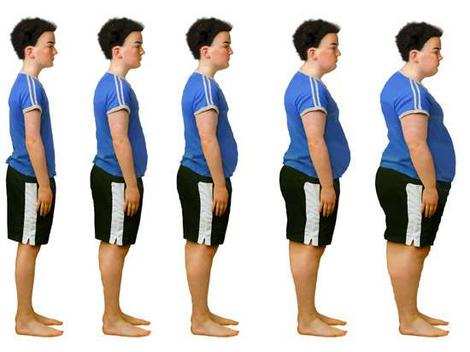
Wednesday, March 4, 2009
Proposal 1:
What is the design question you will seek to address?
How can deconstruction be utilized in graphic design to communicate in a more effective manner?
- Stay away from order
- Stay away from grid
- Explore Form
- Twist the surfaces to create dynamism
What are the outputs you will produce?
Print - Posters
Web - Gallery
Video - Animation

Monday, March 2, 2009
Integrating Technology into a Problem-Solving
Jeffrey W. Morin
Professor of Art and Design, University of Wisconsin-Stevens Point
The pertinent methodology of a graphic design curriculum is the problem-solving process, which can be seen as a chain of events which are sequenced as follows: (1) defining the problem, (2) gathering information or researching, (3) developing ideas, (4) finding solutions, and (5) implementing one or more solutions.3 The computer functions as an appropriate tool for the student in two links of the problem-solving chain: gathering information or researching, and implementing a solution. Web-based research is becoming an increasingly efficient way to retrieve information but it has not eclipsed the printed word. Training designers to implement solutions via the computer has become expected by the graphic design industry, which has been radically modified in the past five years. Also, some solutions are no longer envisioned as printed work but as time-based or web-based vehicles.
Sunday, March 1, 2009
Open Source Multimedia Operating System
Linux Ubuntu Studio
- Today i installed an open source operating system Linux Ubuntu Studio.
I will explore the software and how i can use it in my educational needs.


